Day 98: AIRD

Rupachitta Robertson interviews a different Uig artist each month for community newspaper Uig News. A few weeks ago it was me, and we talked for about an hour about lots of different things, most of which the newspaper didn’t have room for. With Rupa’s permission I’m posting a longer version here, since it’s a good introduction to the thinking behind the new album, AIRD.

“I grew up in Cumbria. Living on the border of things has shaped me in a lot of ways. I had an English father and a Scottish mother. I was interested in music and creativity from when I was very young and started writing and recording songs when I was about 14. Hundreds, mostly terrible. There was a vibrant music scene in the North of England in the 1980s that had a big formative influence on me. Electronic pop type stuff. Human League, Pet Shop Boys, ABC, New Order and Factory Records. But I was also drawn to Scotland.

“I knew I wanted to make music but for a long time I didn’t really know how to do it. Then, when I was in my late twenties, I met Hamish Brown. We both had loads of unreleased home recorded music, and we joined forces as Swimmer One. Our friend Laura (later my wife) later joined the line-up and we were active for about ten years. We released two albums, The Regional Variations and Dead Orchestras, played some festivals, had a song in a film, and worked on a big theatre show with many well known Scottish musicians. Hamish has mastered my new album, AIRD.

“I know that in Lewis a lot of islanders go off to the mainland, do something and then feel drawn back by the pull of home and community. That’s not something I ever felt about Carlisle. But I was drawn to Lewis, for reasons that I didn’t fully understand until I got here. I later released that Aird Uig reminds me of a two particular places in my childhood.

“The first, Hadrian’s camp, was near the village where I grew up, an ex-military base with a history going back thousands of years which was at that point abandoned. It felt like a huge space, with abandoned buildings, overgrown places where you could make dens, and roads where there was no traffic. You could ride your bike and explore and I loved having that freedom as a kid to roam around. It felt like a really safe place and that’s the kind of freedom that I feel my children have here. To be able to roam safely in a place that’s a bit unusual and has these really interesting old buildings and structures. There’s a strange sort of paradox in an ex-military base being a safe place.

“It makes me really happy seeing my kids collecting stones and shells which end up on our doorstep here. It also reminds me of summer holidays in Arran when I was a child. We would roam free, climb mountains, walk beaches and every time we went back to Carlisle I’d have a big box full of stones and shells, treasures that I’d found. I’ve tried to recreate some of what I liked most about my childhood here for my kids. And so I have that sense of coming home that I never felt about Carlisle.
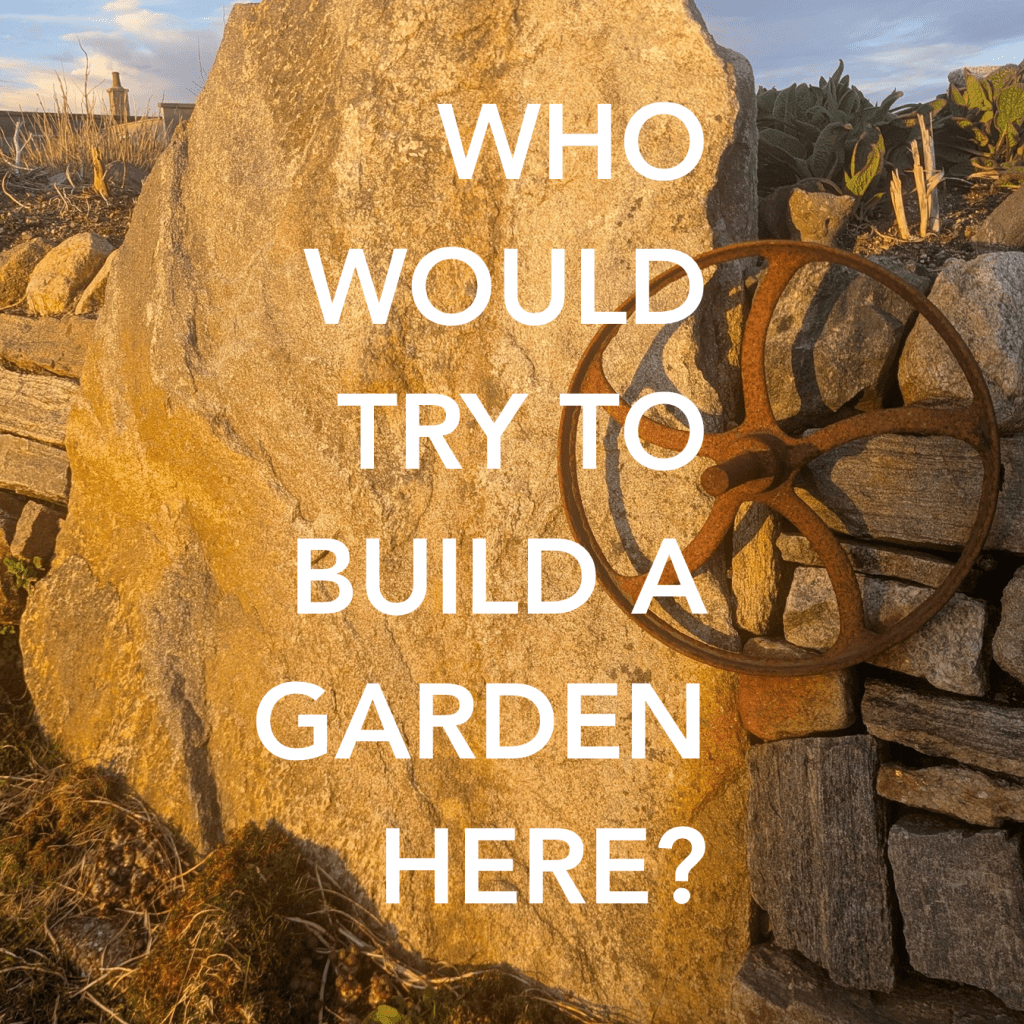
“Derek Jarman was one of my favourite filmmakers. He famously created a home called Prospect Cottage and a garden next to a nuclear power station at Dungeness. Aird makes me think of Prospect Cottage and one of my new songs is named after that. There are a couple of really nice gardens here in Aird. It’s a hard place to grow anything, the weather is challenging, but gardening in a place like this feels like a good metaphor for building a life for yourself, and struggle in general.

“When we first moved up here in 2018, friends in the city thought we’d gone a bit mad. Why were we going to this place on the edge of the world that seems so far away from all the things in the city that people think they need? During lockdown the decision seemed a lot less mad. The opening song on this album, Everyone Is Here, is about how Lewis is only ‘the edge of the world’ from a certain perspective. For the Vikings it was a key central point between Norway and Ireland and Iceland. 
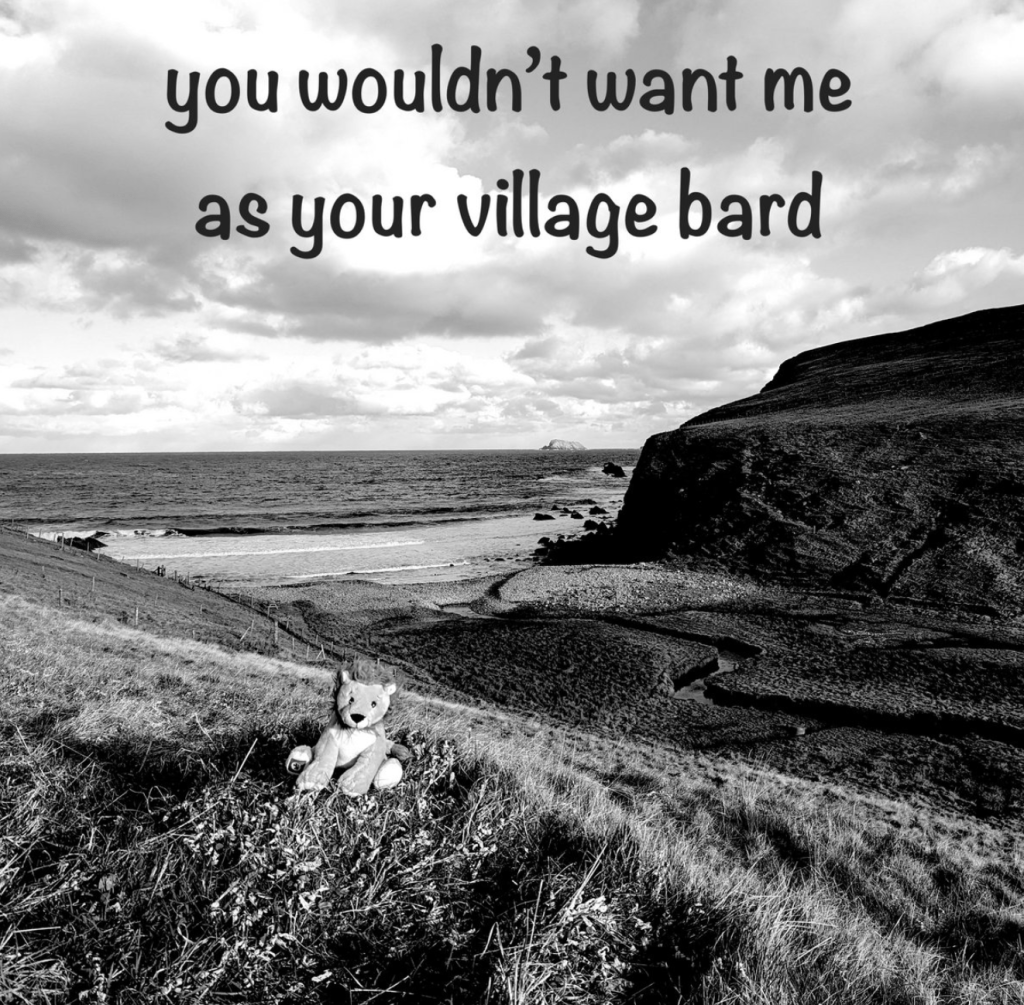
“I’ve never thought of myself as a poet. The words I write are intended to be for pieces of music and I wouldn’t regard them as poems. I’m aware that there is a Gaelic tradition of village bards, people who document the life of a community as a kind of social history and preserve the traditions and the stories of their community. I’m an incomer, I don’t speak Gaelic, I’ve only been here eight years, so I don’t regard myself as qualified to call myself a village bard, but I am writing about village life. The song You Wouldn’t Want Me As Your Village Bard expresses my conflict around that. I don’t feel the entitlement to speak for my community, they can all speak for themselves. A lot of them are artists and express themselves in all kinds of interesting ways.

“Like me, a lot of the people in Aird Uig didn’t grow up here. It feels like a new place in some ways. Half of it is an old crofting village with its own long history, but half of it dates from the 1970s when people started making homes in the former RAF radar station.

“I’m very interested in the complexity of people’s motives for coming to live in a place like Aird. The album opens with the lines:

Some of us came to raise kids,
Some of us came to raise the dead
Some of us came to find ourselves
Some of us kept ourselves well hid.

“In a way, all of these things are me. I came here to raise kids. To raise the dead is a reference to wanting to revive old traditions, to reconnect with nature, to have a different kind of relationship with the world, to figure out who we are.

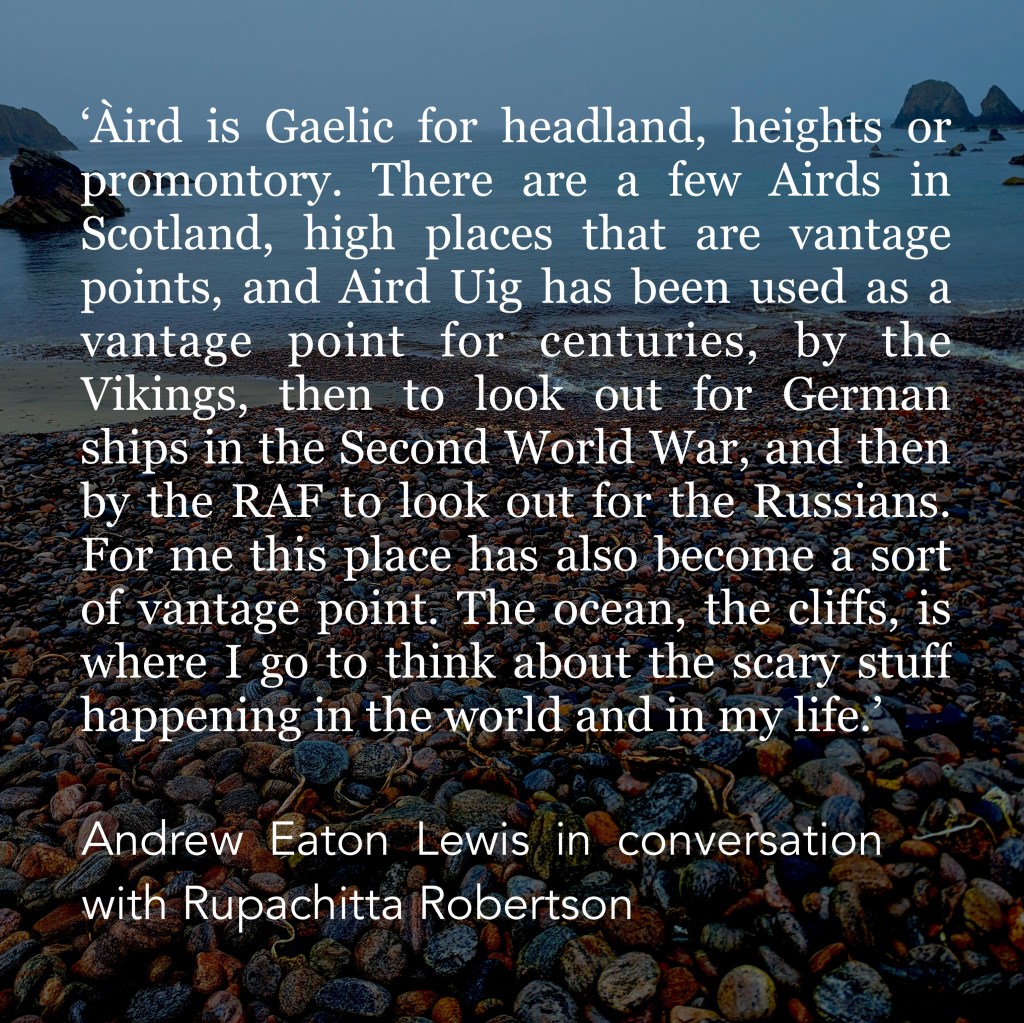
“Àird is Gaelic for ‘headland, height or promontory’. There are a few Airds in Scotland, high places that are vantage points. Aird Uig has been used as a vantage point for centuries, by the Vikings, by the RAF in the Second World War to look out for German ships, and then it was used to look out for the Russians. For me this place has become a sort of vantage point to look out on the world. I take my dog for walks up the hill. I look out at the ocean over the cliffs and I get a sense of clarity. It’s the place I go to think about my relationship with the world and all the political turmoil and all the scary stuff that’s happening in the world, as well as the scary stuff in my own life.

“The closing track, The Kids Are All That Matters, is about parental anxiety, about wanting my kids to be safe, not really wanting them to leave the village but knowing that they are starting to notice the outside world as a place that they’d really like to go to.

“When you become a teenager the things you aspire to, the freedoms you want, are different. They’re the things that cities offer and that’s happening for my children now, but at a time when the world seems really scary. We’ve got something that’s starting to look like fascism in America. We’ve got climate breakdown. The future looks genuinely terrifying in many ways.
“In 2021 I made an album at Wee Studio Records with the lovely Keith Morrison. I was new to the island, I still felt a bit like a tourist, but I was writing songs about the island, about crofting. I called the album Tourism as a kind of acknowledgement that I wasn’t quite a Hebridean musician yet. I was conscious of wanting to be respectful and not presumptuous. I’ve now been here for eight years so I’m becoming a little bit less cautious about that. I am making music that is of the island now, perhaps. I think I probably am a Hebridean artist at this point.”
Days 94-97: The Big Fire | You Wouldn’t Want Me As Your Village Bard | The Stream | The Kids Are All That Matters

Earlier this year my friend Mairi Gillies made an exhibition for An Lanntair that’s been stuck in my head for a while now. I wrote a song inspired by it, The Big Fire

The exhibition was called Uaim an Òir and was inspired by an old story about a piper who goes into a cave and disappears. There are various versions of this story; the common theme is that, in Gaelic culture, caves represent a gateway to the ‘otherworld’. They were also somewhere musicians could secretly play an instrument that had been forbidden by church elders. In other words, they’re places of creativity, magic and rebellion. What’s not to like?

On a basic, instinctive level I loved Uaim an Òir. When it comes to art I’m generally much more excited about things that transform a whole space than things in frames, and this show felt like it was growing organically out of the walls. I also love caves – their look, texture and sound. In fact I’d just written a song about sea caves when I went to Mairi’s show. 

If I’m honest though I also felt at an emotional distance from it. In the exhibition notes Mairi describes Uaim an Òir as “a meditation on how we are born and shaped by the landscapes we are rooted to, the places and spaces we inhabit, and the history and culture embedded in these”, from a Gaelic perspective. But I’ve always felt a bit rootless. I’m half English but repelled by most ideas of ‘Englishness’ (and, like a lot of people, disturbed by the current ‘patriotic’ revival of the English flag). I’m also half Scottish, but didn’t grow up in Scotland so don’t feel I can claim that part of my identity as my ‘roots’, especially when Scotland often seems to define itself by its difference from Englishness (ie: half of me). And Gaelic identity is a different thing from Scottish identity anyway. So I felt drawn to this exhibition in the same way that I’m drawn to Alastair McIntosh’s Soil & Soul (a book I love with which it shares some themes) but also on the outside of it. 

It bothers me that this bothered me. Why should a show about Gaelic culture, by a Gaelic artist, have to pander to a non-Gael? And who wants to live in a monoculture where everyone can identify with everything anyway? I don’t, and there’s plenty of art that I love precisely because it’s a window into a world that’s unlike my own. But sometimes the small differences, the small experiences of outsider-dom, can register most strongly. To pick a random comparison, I love Rye Lane, a comedy about two Black  twentysomething Londoners falling in love on a day-long caper around the city. The film is a fantastically vivid picture of a specific place and time and culture, and while I’m at a distance from it on numerous levels – I’m not Black, I’m not in my twenties, and I’ve never lived in London or the kinds of social circles the characters live in – this didn’t bother me at all. If anything I liked it all the more for that, and besides there are plenty of things in it – love, most obviously – that anyone can connect with emotionally. But for some reason my distance from Uaim an Òir does bother me.

I think I know what’s going on here. The first time I recorded an album in the Isle of Lewis I made a point of calling it Tourism. I wanted to acknowledge my outsider status and emphasise that, as an incomer, I wasn’t presuming to speak for an island and its culture. Seven years into Lewis life, though, the ‘tourist’ thing feels like a cop out. I’m a Hebridean artist now and I feel like I need to work out what that means and where I belong. And the fact is that Mairi, who didn’t grow up in Lewis either, is doing this better than me. She has embraced and explored Gaelic culture to the point where, despite being an incomer, she is increasingly regarded as a standard bearer for it. I, meanwhile, am still fumbling around, likening myself to a ‘tourist’, and feeling like I might need to do better.

Uaim an Òir was still on my mind when I wrote You Wouldn’t Want Me As Your Village Bard. The title refers to the old Gaelic tradition of village bard or village poet (bàrd-bhaile), who would – as I understand it – write in a traditional style about their community, preserving that tradition in the process. I certainly don’t feel qualified to do that, but I am the only songwriter in my village, so in that sense I am quite literally the village bard. Then again, maybe anyone with a social media account is a village bard now, representing their community in public in some way? So the song is me wondering how a specific old Gaelic tradition fits into the modern world, and what grants someone the right to speak for their community anyway. Is it a gift for storytelling, a deep understanding of the culture, the length of time you’ve lived there, or just who has the loudest voice? Maybe the real village bards are the local gossips who find power and status in knowing everyone’s business?

As a slightly solitary creature I’m nervous about writing in this way, and in two minds about whether to pursue it further, particularly given that I don’t speak Gaelic. I’ve heard it said that unless you speak Gaelic you will never fully understand Lewis and I’m sympathetic to this view (it’s true, for example, of the title of Mairi’s exhibition, a Gaelic play on words whose meaning will be completely lost on a non-Gaelic speaker). I feel on safer ground just singing about the landscape, like on The Stream, a song written in the early days of Covid-19 lockdown as I walked my dog up the hill above our village and realised that this small patch of land was mostly enough for me and that I had no desire to travel anywhere anyway (a position of incredible luck and privilege, I know, particularly back then).

I can also write about my children, who are Hebridean in a way that I may never be. I was fully formed by the time I got here but they are absorbing the culture without even thinking about it. The Kids Are All that Matters is a song about trying to keep your children safe at an increasingly frightening time in history, and about the vast gulf between the peace of a Hebridean village and a wider world of war, climate emergency, and authoritarianism. The connecting thread here is Donald Trump, the Isle of Lewis’s most infamous son. It’s very strange watching the impact he is having on the world from his old family home. My children’s friends include relatives of Trump – not that they have any contact with him – and there are ‘Shame On You, Donald John’ banners in windows across the island. In hindsight I wonder if I should have made that connection explicit in the song rather than just writing an oblique reference to ‘the mad men and their money’. Maybe that’s another song, or maybe that’s a job for a different kind of village bard.

Day 91: This is the Start

It’s a bit of a shock to reach the end of 2024 and realise I’ve not written a single song this year. The last song I managed to finish was This is the Start, released in January 2024 but recorded back in the summer of 2023. At the time it felt like a step towards something new but I don’t know now. It’d be a funny title for the last song I ever released if that was what it turned out to be.

I did learn a couple of lessons with This is the Start which I wish I’d learned earlier. The first was that if you call a song This is the Start then DJs will play it right at the start of their show. In this case, Roddy Hart and Tom Robinson both did, with Tom giving the song one of the loveliest, most enthusiastic endorsements I’ve had on BBC 6 Music. The other thing I learned – which really I knew already but was in denial about  – was that pop songs tend to work best if they’re explicitly about being young. I now wish I’d spent less time, when I was younger, trying hard to sound older and cleverer when I would probably have been better off leaning into my youth and naivety, both of which might have been more relatable.

I suspect that part of the reason I haven’t written anything new since 2023 is that the other three songs I wrote that year – Lights OutThe Stages and Do Your Worst – felt like a lyrical cul-de-sac, overly melancholy reflections on mortality and identity that I apparently needed to get off my chest as I turned 50.  If you can relate to that, great, and they’re all available as rough sketches on Bandcamp, but increasingly I was feeling like I should write about something else and also make music in a different way. Other than This is the Start though, I’ve still not figured out what that looks like over a year later.

It’s a bit ironic then that in 2023 and 2024 I’ve spent more time than ever in the company of other songwriters.

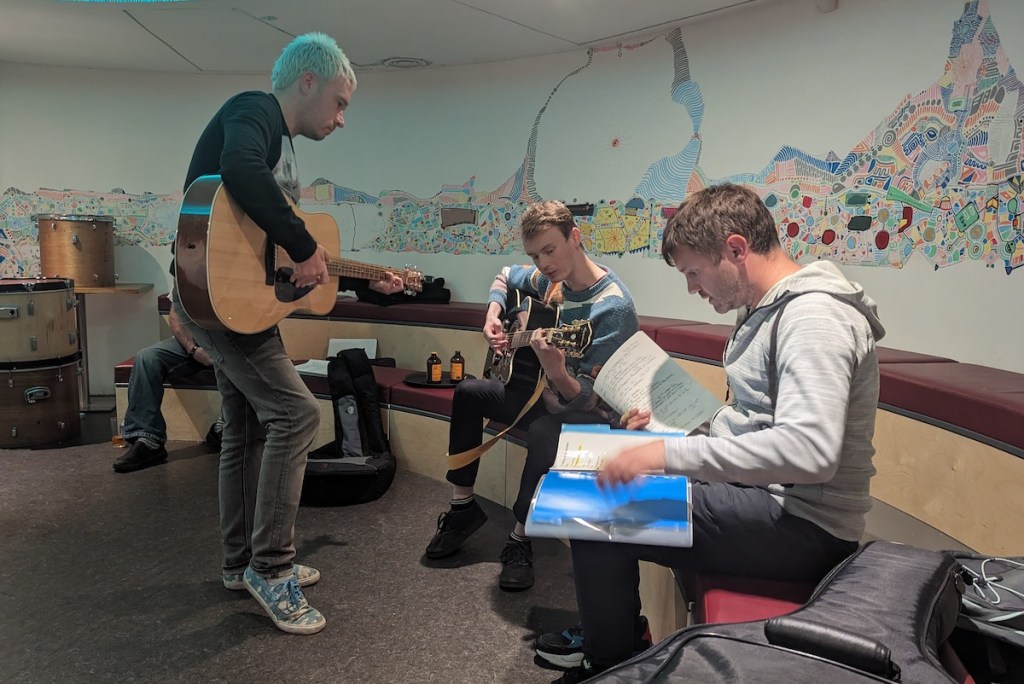
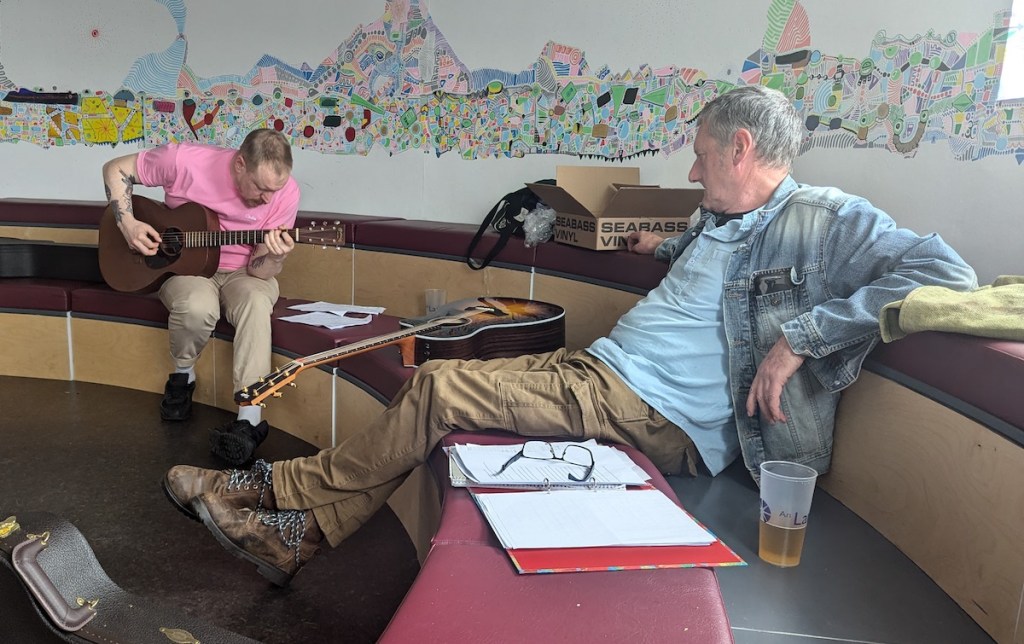
In July 2023 I began hosting a Songwriters Circle for An Lanntair as part of my job running the venue’s artist support programme. Every month I host a free gathering where Hebridean songwriters can share things they’ve been working on, often in an unfinished state, with no audience and no pressure to ‘perform’. We talk a lot about music we like and why we like it. In two years of doing this I’ve only shared one of my own songs a couple of times, and in each case it’s been something old. I keep hoping these get togethers will prompt me to write new music but they never do.

What they have done, though, is remind me that the songs we hear on the radio, YouTube or TikTok mostly aren’t getting that exposure because they’re better, melodically or lyrically, than the songs we mostly don’t hear. That exposure is the result of various elements coming together that often have nothing to do with the song itself. I’ve heard dozens of songs at our Songwriters Circle over the past couple of years that could get lots of national or international airplay in the right circumstances – the right producer, the right radio plugger, the right music video, or perhaps just the right singer, of the right age and background, wearing the right clothes, at the right moment in time.

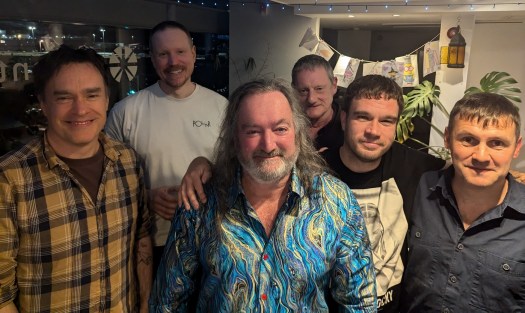
Our circle has a few regulars in addition to the various people who drop in and out. Here they are with me below – (left to right) Matthew Newsome, Martin Flett, Michael Winder, Richy McKendrick and Iain Smith – at Martin’s album launch in October 2024. I want to write about each of them in turn, because I’m currently more excited about their music than my own. 

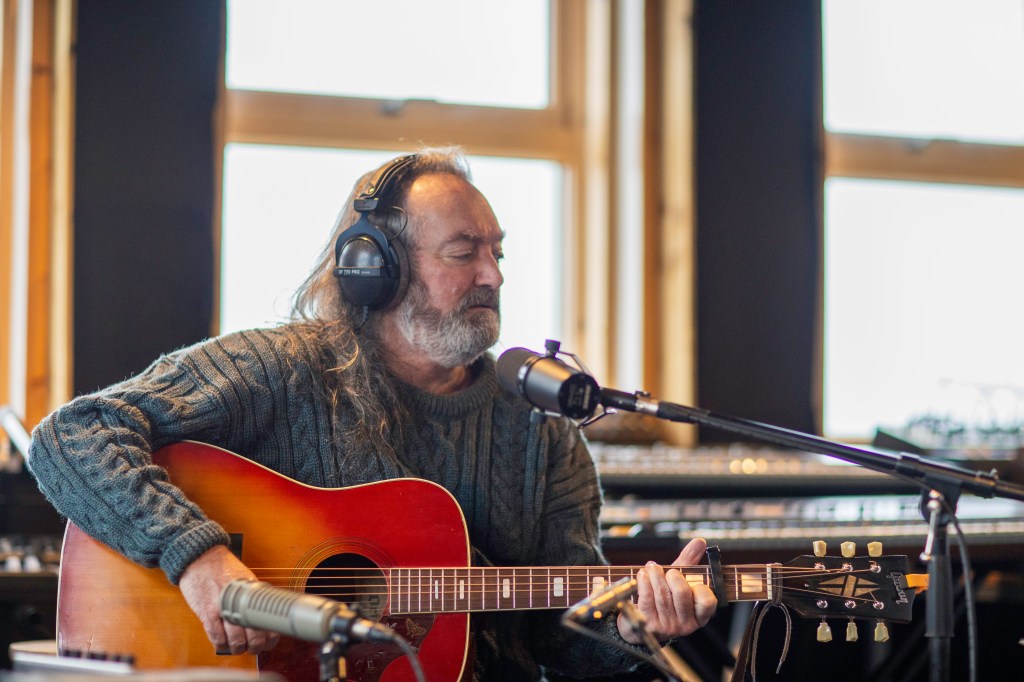
The one I’ve worked with most is Martin Flett. Martin is a competitive powerlifter who began writing songs during the Covid-19 lockdown in 2020, has now written over 100, and just released his debut album at the age of 68. He’s an example to anyone who ever thought they’ve left it too late to be an artist.

Martin has a gift for writing songs that sound like they’ve been popular for 40 or 50 years, not just here but in the USA (one review described it as “the point where the Outer Hebrides meet Monument Valley”). When Martin plays them in Stornoway pubs, people are frequently shocked to realise that he wrote them because they sound so much like old favourites by Neil Young or Roy Orbison.

I mentored Martin through the artist support programme, which involved helping him to choose ten or 11 of his strongest songs to put on an album, deciding on a running order, and working on musical arrangements, all of which are among my favourite things to do. We recorded the album at Wee Studio with a band that included both established professional musicians like Colin Macleod (on drums) and studio first timers like Mary Suckling who Martin had heard singing in a pub. 

The album, aptly titled When The Introverts Come Out, is on sale now via Martin’s website. The music evokes a different time and so does the sales pitch. You can’t actually stream the whole thing online – Martin refused to put it on Spotify and there isn’t even an embedded player on his website, just written descriptions of the songs – which means you have to buy it the old fashioned way, taking a gamble on 40 minutes of music based on a song you heard on the radio. Hardly anyone listens to music that way now so it’s been a hard sell but I admire him for being so uncompromising. Also he’s right. Spotify has been catastrophic for working musicians. Everybody knows this and just pretends it isn’t a problem. But if you claim to want to support music, then actually do it. Spend a tenner on Martin’s album instead of a pint and a half of lager.

Iain Smith is like a Hebridean Gordon McIntyre, with moments that remind me of Jarvis Cocker or Sparks (or Helen Love if you enjoy more obscure references). Or Billy Bragg when he (Billy, not Iain) is being funny rather than a self-righteous bore. Iain writes witty, observational songs with titles the Pet Shop Boys might come up with if they lived in the Isle of Lewis – The Last Gaelic Speaker on EarthCrofter Girl and The Existentialist Islander. In an alternate universe – probably one in which he doesn’t live in Stornoway – he’s the frontman of the kind of beloved cult indie band that Melody Maker or the NME used to write long, adoring articles about. John Peel would have loved him. I hear that Peat and Diesel are currently wrestling with their difficult third album, having already said everything they have to say. I think they should hire Iain to write their songs instead. 

I shouldn’t have favourites, but at the moment everything Michael Winder writes blows me away. Mike was raised in Carlisle like me, which may explain the bias. He gave me a CD a while ago of songs he’s recorded dating back to the 1980s and it’s like a journey through time. In less than an hour you go from something that could have been on Bowie’s Let’s Dance to something that could be by the KLF or the Shamen. Back in the 1980s he was part of the Manchester music scene. One of his friends, Ged Duffy, was the frontman of Stockholm Monsters and Mike is name-checked in Factory Fairytales, a memoir Ged recently published which has introductions by Peter Hook from New Order and Mani from the Stone Roses. Mike’s own band almost supported New Order but fell apart days before the gig. 

Like Ged, Mike never quite had his moment in the spotlight, but moving to the Hebrides seems to have been transformative for his songwriting. The songs he’s writing now all hit a sweet spot between hilariously funny and emotionally raw. There’s one called Relix which is particularly beautiful: “The loch is so still here, a floating painting of faraway suns, but behind me the crash of the waves says the ocean will not stay still for anyone.” He has a much older song called Delirious Dreams that originally sounded like Furniture (of Brilliant Mind fame) but which he’s now reinvented as something much simpler and acoustic. I really want to play piano on it. Last month Mike recorded two songs at Wee Studio and invited all the Songwriters Circle regulars to come in for an hour each to contribute anything we wanted on the condition that he was allowed to be brutal with the edit. I’ve heard the results and they’re great. Mike mostly makes music for himself these days but I’m hoping to persuade him to release the recordings next year.

Richy McKendrick is completely different from all of the above. It’s odd hearing him sing each month with just an acoustic guitar because he has the kind of voice that’s better suited to belting out songs with a full band – think Liam Gallagher with a bit of Chris Cornell. Every time we do the Songwriters Circle I worry that the people in the cinema next door will be able to hear him even over the noise of the film. It’s a voice that suits either the swagger of Oasis or the existential howl of Soundgarden. Except that Richy doesn’t really do either of those things because he’s too humble and nice. Instead he writes songs that are deeply thoughtful and emotionally vulnerable, that frequently start with simple pop hooks before veering away from them into something more surprising and adventurous. It’s a strange combination of elements in some ways, and I think Richy may share my habit of writing counterintuitively rather than leaning into the most obvious use of whatever gifts we may have, just because it’s a more interesting challenge. Like Martin, Richy has been supported by An Lanntair’s artist mentoring programme, with Willie Campbell generously providing not just guidance but access to his home studio. Richy and Willie recently recorded a great new song which I’m hoping will see the light of day in 2025.

The fifth regular attendee, Matthew Newsome, is completely different again. He shares new songs less regularly than the others because 1. he’s a perfectionist and 2. he writes complex, ambitious prog rock material that takes him a long time to finish and is occasionally beyond his musical abilities as he readily admits (I should point out here that Matthew is a better musician than any of us, he just has a habit of making things harder for himself). 

Matthew tends to play us fragments rather than anything finished, frequently stopping half way through to explain why a particular bit still needs more work, but the fragments are always interesting – they often remind me of David Sylvian – and it’s been fascinating to watch him trying to write in a simpler way, despite a strong instinct to do the opposite, so that he can share things with us on an acoustic guitar rather than just playing finished recordings to us on his phone like he did when he joined the group for the first time.

I relate to Matthew’s tendency to overthink things because I do that too, something I’ve written a lot about in this blog. My latest example is the title of a Bandcamp only compilation that I decided to put together last month, bringing together some of the music I’ve made under my own name from 2019 until now. Retreat! has several meanings, all obscure. The most obvious one is that it refers to the reverse chronological track-listing (beginning with This is the Start from 2023, ending with The Song That Says They’re Gone from 2019), an idea I borrowed from Countdown 1992-1983 by PulpRetreat! is also a reference to my gradual retreat from songwriting, as well as being a wry joke about how non-islanders tend to think of the Hebrides – as a ‘retreat’, a place of peace and quiet and tranquility rather than somewhere anyone actually lives, let alone making the kind of music I make. The final, most obscure reference point is Monty Python and the Holy Grail. When I say Retreat! in my head, it’s in the voice of King Arthur and his knights as they flee from French people throwing things at them from a castle. Except that in the film they say ‘Run away’ so nobody would ever make the connection.

Anyway, I was probably far too pleased with myself for coming up that title, given that I spent considerably more time thinking about it than thinking about how to promote Retreat!, which slipped out into the world without anyone noticing. My retreat from songwriting has happened in much the same way. I’m currently thinking more deeply about songwriting than I have in years, I’m just putting very little of that mental energy into actually being a songwriter or trying to promote myself as such.

I’ve been here before, so maybe I’ll feel differently in 2025. Laura clearly thinks so even if I don’t, because she bought me a new piece of tech for Christmas that will enable me to set up a home studio for the first time in my life. But in the meantime I’m happy with my circle and more interested in talking up their music than mine.